Develop
After successfully defining what the right problem is to solve, it is time to embark on an ideation journey. Ideation is the process of generating a broad set of ideas to solve a previously defined problem, with no attempt to judge or evaluate them mid-session (Harley, 2017).
Ideation
The objective of ideation is to improve user experience. By investigating multiple solutions in parallel, we have a better chance of discovering the optimal solution, rather than merely the first that pops to mind. A critical mechanic of an ideation session is that all judgment is postponed until after (Harley, 2017).
Early ideas are Fragile
Young ideas are usually unfinished and as a result, it's easy to concentrate on its flaws rather than its beauty. This is why it's so important to remember not to judge ideas in the middle of ideation. Dugosh et al. (2000) determined that a subsequent incubation session would be useful. Designers can use this time to reflect on the ideas that have been shared, to generate additional ideas. This also leads us to another important factor, the power of collaboration.
Collaboration
The same paper suggests there are benefits to the exposure to others' ideas in brainstorming sessions. Even when designers are generating their own ideas, it's possible to process the ideas generated by someone else simultaneously. In essence, that suggests collaboration spurs more and more diverse ideas.
Volume and Diversity
The metrics for measuring ideation effectiveness is defined by the volume and differentiation of the pool of ideas (Nelson et al., 2009). The quality of design space exploration is a key component to good user experience Nielsen writes (Nielsen, 2017).
Scale Back
It is integral for effective ideation to set aside any real-world constraints such as technical feasibility or business viability. At this stage of the design process, no idea is too farfetched.
“You want to be able to project yourself 20 years into the future, and then think backwards from there. Trust yourself—20 years is a long time; it’s ok if your ideas about it seem pretty radical.”
- Sam Altman (2020)
It's easier to scale back a crazy idea that addresses a true user need than to try to make a mundane idea desirable (Harley, 2017).
Evaluate
While it's clear we shouldn't put fresh ideas down, at some point we'll have to decide which ones to toss, and which to move forward with. That's where evaluation comes into play. Design thinking generally looks at evaluating feasibility, desirability and viability (Brown & IDEO, 2018), integrating human needs with business needs. When we zoom in on the people's needs we find research that that categorizes product experience into three levels.
Levels of experiencing product
Pieter Desmet & Paul Hekkert (Desmet and Hekkert, 2007) introduce a framework to assess product experience. The three levels of product experience they define are aesthetic pleasure, attribution of meaning and emotional response.
- Aesthetic: a product’s capacity to delight one or more senses
- Meaning: users' tendency to attach personal or symbolic significance to the products they use
- Emotional: he emotional response we have when interacting with products
These lenses can be considered to ensure all bases are covered by our evaluation process.
In Practice
Our ideation sessions were mostly done synchronously as a group. We started the process by clearing our head, writing down our initial thoughts (they're generally not the best ideas).
Ideation
There are many ideation tools we could've used, but our journey was inspired by The Pop-up Agency's variation of Crazy 8's. Their method provides several prompts to encourage diverse ideas, like; “Idea your granny can understand”, “Zero budget idea” and “Unlimited budget idea”. I generally take a little time to get into ideation zone, but the prompts helped me get there a little sooner than usual.
Evaluation
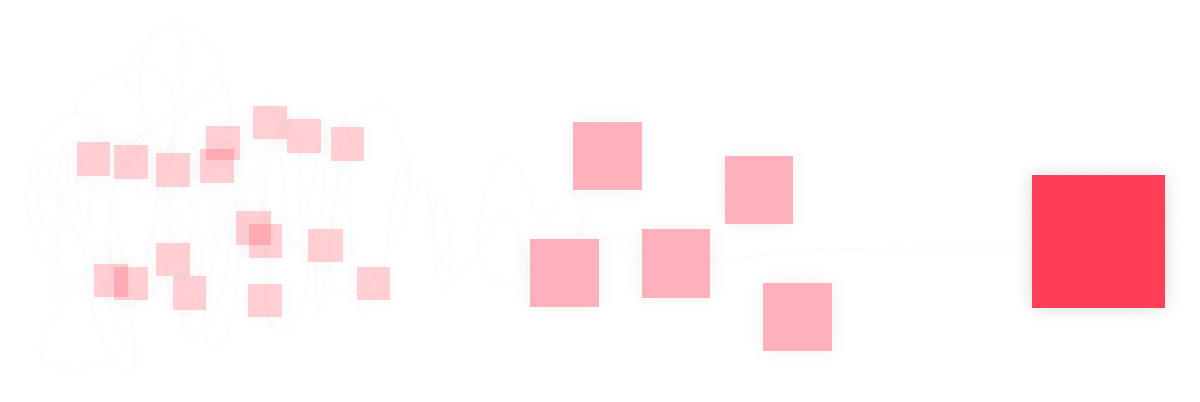
Our evaluation came quite naturally, we individually filtered the ideas we personally weren't fond of. That cut our idea pool from around 30 to roughly 12. We quickly saw some overlapping ideas, which we combined into two larger ideas:
- Shoes sold at a premium that become cheaper as they're being worn often
- A digital wardrobe with old (no longer for sale) collections